


Activities & Experiences
Scuba Diving Courses & Guide
From First Breath to Certified Diver
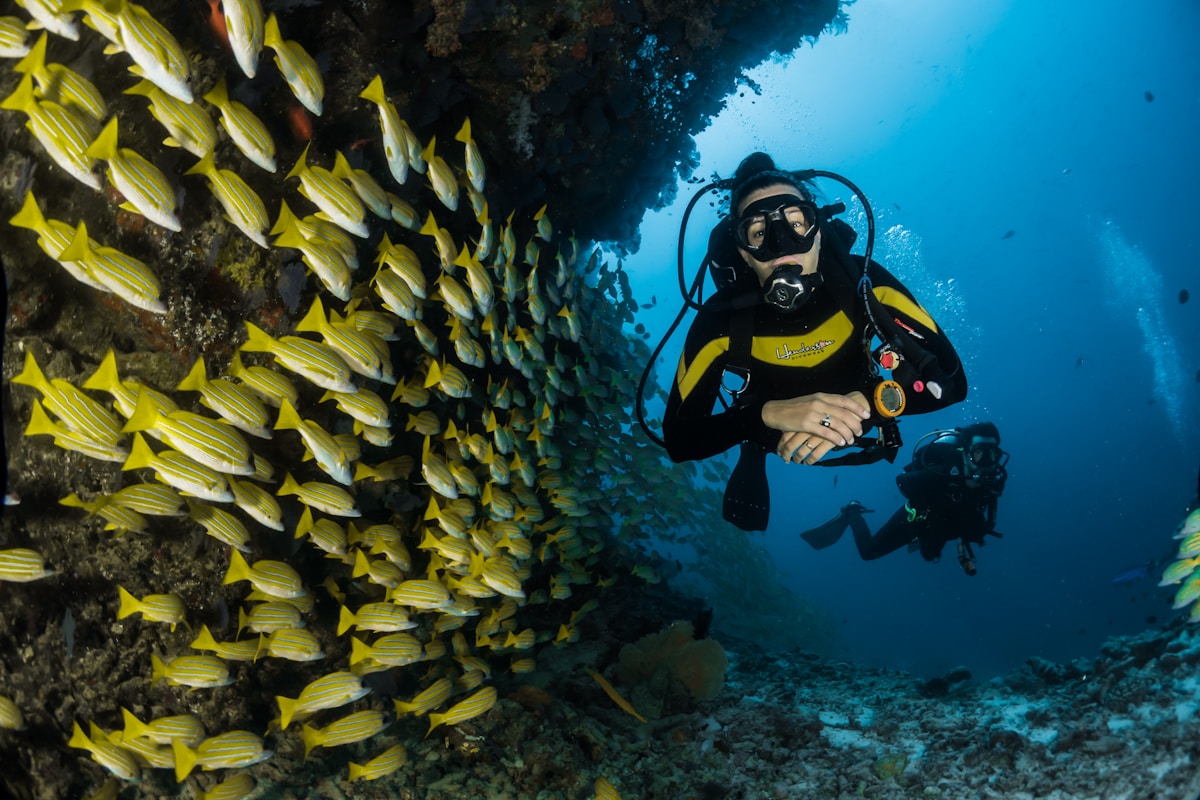
The Red Sea isn't just famous among divers — it's the reason many people become divers in the first place. Sharm El Sheikh sits at the center of it all, with Ras Mohammed, Tiran Island, and the Straits of Gubal all within reach. Whether you've never worn a tank or you're looking to go pro, the courses here are world-class and often significantly cheaper than in Europe or the Americas.
Most dive centers in Sharm follow PADI or SSI certification systems, both internationally recognized. You'll find everything from a one-day introductory experience to month-long professional training — and the water is warm enough year-round that you'll never need a thick wetsuit. Visibility regularly exceeds 30 meters. Currents are generally mild on beginner sites. It's genuinely one of the easiest and most rewarding places on earth to learn.
Diving Courses: From Beginner to Pro
A taste of diving for complete beginners. Morning theory session covering basic safety, followed by shallow-water skills practice, then a real dive at a coral site with an instructor holding onto you the whole time. Maximum depth: 6-12 meters. Perfect for testing whether diving is for you before committing to a full course.
The classic entry-level certification. Covers dive theory (partly online these days), confined-water skills in a pool or shallow bay, and four open-water dives over two days. Once certified, you can dive anywhere in the world to 18 meters with a buddy. This is where most people start.
Five specialty dives: deep dive (to 30m), underwater navigation, plus three electives — night diving, wreck diving, and drift diving are popular choices in Sharm. No classroom work, just diving. Expands your depth limit and opens up more challenging sites like the Thistlegorm wreck and Ras Mohammed's deeper walls.
Widely considered the most rewarding course in the PADI system. You'll learn to prevent and manage diving emergencies, perform rescues, and handle real-world scenarios. Challenging and physically demanding, but it transforms you from someone who dives into someone who can truly look after others underwater.
Deep diving, wreck diving, night diving, underwater photography, nitrox (enriched air), drift diving, peak performance buoyancy. Most dive centers in Sharm offer the full range. Take them individually or bundle them. The Thistlegorm wreck specialty is a Sharm classic.
The first professional rating. Divemaster training takes several weeks and includes assisting instructors, guiding certified divers, and mastering dive theory. Sharm is one of the cheapest places in the world to do your Divemaster internship. Instructor courses (IDC) are also available at select centers.
What You'll Pay: Realistic Course Prices
Diving in Sharm is substantially cheaper than Europe, the US, or Australia — often half the price or less. The quality of instruction is high, and many instructors are multilingual. Prices vary between centers, and booking directly rather than through a hotel or online platform usually yields a better rate.
| Discover Scuba Diving | Usually $50-80 USD for a single introductory dive including all equipment |
| Open Water Diver (PADI/SSI) | Usually $350-450 USD all-inclusive — theory materials, equipment rental, and certification fee. Some centers offer accommodation packages that bring the effective cost lower |
| Advanced Open Water | Usually $280-380 USD including all dives, equipment, and materials |
| Rescue Diver | Usually $350-450 USD including materials and equipment |
| Specialty Courses | Usually $100-250 USD per specialty depending on the number of dives required |
| Divemaster Internship | Varies significantly by center and duration — expect a package price rather than a per-day rate. Some centers offer free accommodation with long-term internships |
How to Choose a Dive Center
Sharm has dozens of dive centers — some excellent, some adequate, a few you should avoid. A PADI 5-Star or SSI Diamond rating is a good starting filter, but it doesn't guarantee quality. The best centers tend to be the ones that have been operating for 10+ years with consistent reviews.
Visit the center in person before committing. Look at the equipment — is it well-maintained or visibly worn? Talk to the instructors — are they approachable and happy to answer questions, or do they seem rushed? Ask what the instructor-to-student ratio is for courses. For Open Water, anything above 4 students per instructor is worth questioning.
Many centers in Sharm are clustered in Naama Bay, Hadaba, and along the main hotel strip. Centers attached to five-star resorts tend to charge more for the same certification. Independent dive centers in Hadaba and near the Old Market often offer the same PADI card at a better price.
All reputable dive centers will ask you to complete a medical questionnaire before you start. Certain conditions — asthma, epilepsy, some heart conditions — may require a doctor's sign-off. If you have any pre-existing medical conditions, bring a letter from your doctor confirming you're fit to dive. It saves time and potential disappointment.
Sharm's Best Dive Sites by Level
Beginner: The near-reef sites at Naama Bay and Shark's Bay, plus the shallow coral gardens at Ras Mohammed. Gentle slopes, minimal current, maximum depth around 12-15 meters. Perfect for training dives and first-timers.
Intermediate (Open Water certified): The walls at Ras Mohammed — Shark Reef and Yolanda Reef — where you drift along vertical coral faces dropping into impossibly blue water. Tiran Island's four reefs (Jackson, Woodhouse, Thomas, Gordon) offer similar experiences with the chance of larger pelagic visitors.
Advanced and wreck enthusiasts: The SS Thistlegorm, a British cargo ship sunk in 1941, lies a couple of hours north of Sharm. It's widely considered one of the world's best wreck dives. The holds still contain motorcycles, trucks, rifles, and railway rolling stock. Depth: 16-30 meters. You need Advanced Open Water certification. Book an early-morning trip — the site gets crowded by midday.
For the truly experienced: The Straits of Tiran offer drift dives with stronger currents and the chance to see hammerhead sharks in season (July-September). These are challenging dives and not suitable for newly certified divers.
You cannot fly within 18-24 hours of your last dive — the reduced cabin pressure increases the risk of decompression sickness. If you're doing a multi-day course, make sure your final dive ends at least a full day before your flight home. Reputable centers will plan your course schedule around this automatically, but it's worth confirming.
Best Time to Learn
You can learn to dive in Sharm year-round. Water temperatures range from about 21°C in January to 29°C in August — warm enough that a 3mm wetsuit is comfortable even in winter for most people. The best visibility is generally April through June and September through November, when the water is warm and clear but not yet packed with summer plankton blooms.
If you're doing your Open Water course, avoid the hottest months (July-August) if you struggle with heat. You'll be in and out of the water throughout the day, and the air temperature regularly exceeds 38°C. Not a dealbreaker, but something to factor in if you're not a fan of extreme heat.
Ready to Go Deeper?
The Red Sea has been turning beginners into lifelong divers for decades. Your first breath underwater here won't be your last.
Find a Dive Center →