


Discover Sharm
Blue Hole Dahab
The Deep Blue Mystery of the Red Sea
From the shore, it doesn't look like much. A gap in the coral. Darker water where the reef suddenly stops. But step to the edge and look down, and you'll understand why divers from every continent have Dahab's Blue Hole on their bucket list. A perfect circle of impossibly deep blue, dropping 130 meters straight down into the earth. It's one of the most famous — and most misunderstood — dive sites on the planet.
The Blue Hole has a reputation. You've probably heard it called the "Divers' Cemetery" — a nickname that's equal parts dramatic and misleading. Yes, the hole has claimed lives, almost exclusively among divers attempting to navigate a deep underwater archway without proper training or equipment. But for the vast majority of visitors — snorkelers, recreational divers, and those who simply come to gaze into the abyss from the shore — the Blue Hole is safe, spectacular, and utterly unique.
What Exactly Is the Blue Hole?
Geologically, the Blue Hole is a submarine sinkhole — a vertical shaft carved into the limestone reef platform over thousands of years. It's about 50 meters across at the surface and drops to a depth of roughly 130 meters. At around 56 meters, there's a natural archway in the wall — a tunnel that connects the hole to the open sea. This arch, known simply as "The Arch," is what gives the site its dangerous reputation.
The hole is encircled by a shallow coral rim called "the saddle" that sits just a meter or two below the surface. Snorkelers can float here, peering down into the blue while colorful reef fish weave through the coral at their feet. The contrast between the sunlit shallows and the darkness of the hole is arresting — like standing at the edge of something ancient and unknowable.
For Snorkelers and Non-Divers
You don't need scuba gear to experience the Blue Hole. Snorkeling around the rim is genuinely rewarding. The coral gardens that ring the hole are healthy and shallow, teeming with parrotfish, angelfish, butterflyfish, and the occasional turtle. The water is crystal clear — visibility routinely exceeds 30 meters — and looking down into the hole from the surface is an experience in itself. The blue deepens from turquoise to navy to something approaching black, and you feel the depth in your stomach even if you can't see the bottom.
There's a viewing platform on the shore side where you can sit and watch the divers enter and exit the water. The surrounding area has a handful of simple Bedouin-style cafés where you can drink tea, eat fresh flatbread, and debrief with other travelers. It's a social spot as much as a natural one — people swap stories about what they saw, what they felt, whether they'd go deeper next time.
For Divers: What You Can Actually Do
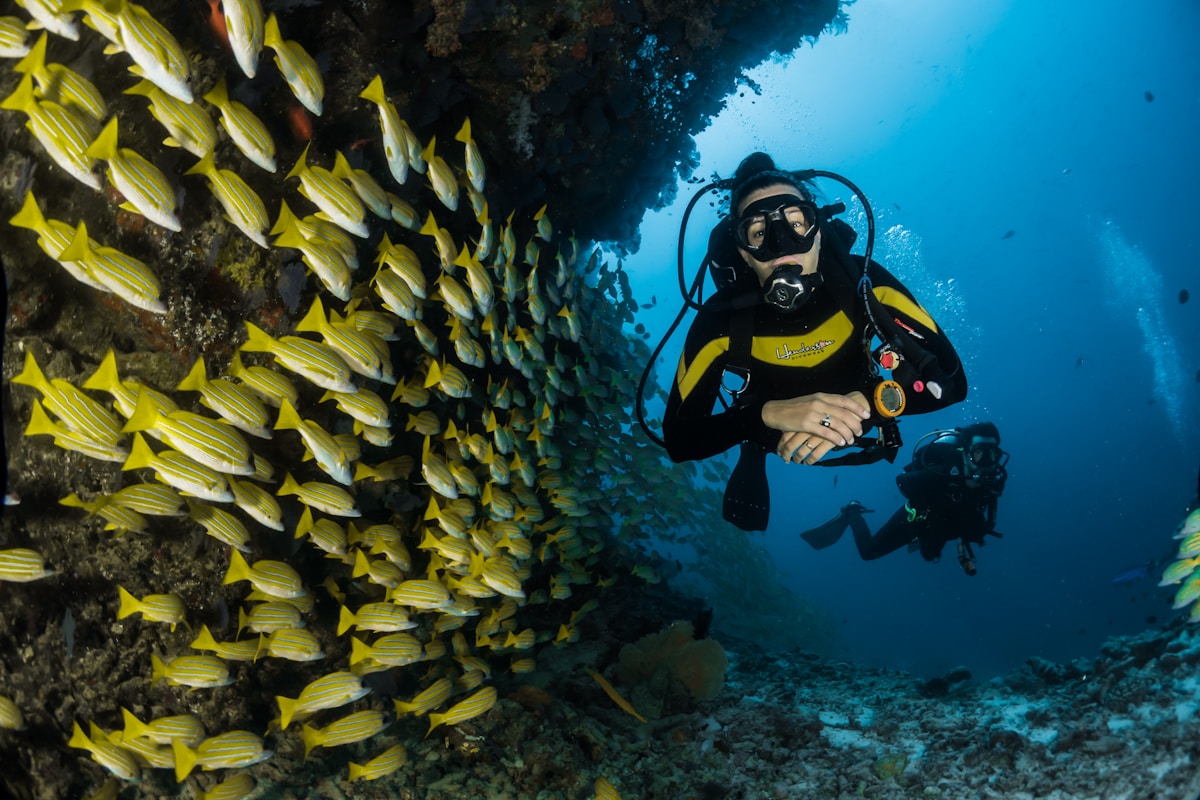
For recreational divers — Open Water certified or above — diving the Blue Hole is perfectly safe and spectacular. Most dives stay within the upper 30 meters, exploring the coral-covered walls that plunge vertically into the blue. The marine life is abundant: schools of bannerfish, lionfish lurking near overhangs, moray eels peering from crevices, and if you're lucky, a turtle or eagle ray passing by. The dive is typically done as a drift around the rim, descending near the entry point and slowly working your way around the circumference.
The Bells to Blue Hole is a classic Dahab dive that starts at a narrow chimney called "The Bells" about 100 meters north of the hole. You descend through the chimney, exit onto a vertical wall at around 28 meters, and drift south along the reef until you reach the Blue Hole itself. It's consistently rated as one of the best recreational dives in the Red Sea.
The Arch — the deep tunnel at 56 meters — is for technical divers only. It requires specialized training, redundant equipment, and gas mixtures for decompression. Attempting it on a single tank of recreational air has been fatal for divers who overestimated their abilities. Reputable dive centers in Dahab will not take recreational divers anywhere near the Arch. If you're not a certified technical diver, this isn't something to attempt. The rest of the Blue Hole — the upper walls, the saddle, the marine life — is spectacular enough.
"Floating above the Blue Hole is like hovering over the edge of the world. The coral is right there, bright and alive — and then the reef just stops, and beneath you is nothing but blue descending into darkness. It's terrifying and beautiful in equal measure."
Getting to the Blue Hole from Sharm
The Blue Hole is in Dahab, a laid-back coastal town about 90 kilometers north of Sharm El Sheikh. The drive takes roughly one hour to one and a half hours depending on traffic and checkpoints. Most visitors go as part of an organized day trip, which typically includes transport, lunch in Dahab, and — if you're diving — equipment and a guide.
Dahab itself is worth spending time in. Unlike Sharm's polished resort strips, Dahab has a bohemian, backpacker-friendly atmosphere. The promenade is lined with open-air restaurants where you sit on cushions and eat fresh seafood with your feet in the sand. Many people visit the Blue Hole and end up extending their stay in Dahab — it has a way of slowing you down.
Practical Information
| 📍 Location | About 10 km north of Dahab town center, 90 km from Sharm El Sheikh |
| 🚗 Getting There | Day trip from Sharm (1-1.5 hours each way). Taxi or organized tour. The road is good and well-signposted |
| 💰 Entry Fee | Small entrance fee for the site (usually included in tour packages). Snorkeling from the shore is free once inside |
| 🤿 Diving | Book through a reputable dive center. The Bells to Blue Hole drift dive is the classic. Technical diving for the Arch requires certification |
| 🍵 Facilities | Basic cafés and restaurants near the site. Toilets available. Bring cash — card machines are rare |
| 📸 Photography | Excellent from the surface and the viewing platform. Underwater, the coral walls and the blue gradient make for stunning shots |
Most Blue Hole day trips from Sharm include lunch at a waterfront restaurant in Dahab and free time to wander the promenade. If you have the energy, the nearby Canyon dive site is another world-class spot — a crack in the reef that you swim through like an underwater corridor. Ask your dive center about combining both sites in one trip.
The Blue Hole is one of those places that lives in your memory. Whether you snorkel the rim, dive the walls, or simply sit at a café watching the light play across that impossibly blue circle of water — it's an experience that stays with you. The Red Sea has many treasures. This one is unlike any other.
Stare Into the Blue
The Blue Hole is calling. Whether you dive, snorkel, or just watch from the shore — this is one Red Sea experience you'll never forget.
Explore More Places →